What Is a Main Water Service Line?
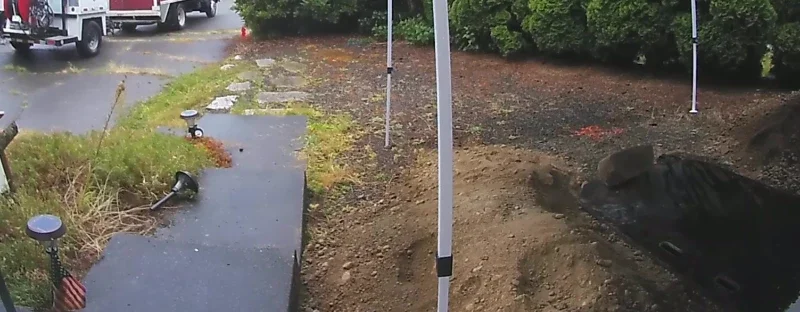
The main water service line is the pipe that runs from the public water meter at the street curb or sidewalk to the point where water enters your home. In Lynnwood, most residential service lines run underground across the yard — anywhere from 20 to 100 feet depending on the lot layout and where the meter is positioned. This buried section is typically the homeowner's responsibility to maintain, from the meter on their side of the curb stop to the home's foundation.
Service lines in the Lynnwood area were historically installed using a variety of materials depending on era: galvanized steel in older construction, copper in homes built through the 1970s–90s, and polyethylene or PVC in more recent work. Each material has a different failure profile and service life, which affects when and how leaks develop.
Because the entire service line is underground, a failure can go completely undetected visually. Water escapes into the surrounding soil rather than pooling where you can see it — especially in Lynnwood's already-saturated clay soils where additional moisture blends in. The first indication is often a water bill that has increased without explanation, or a subtle reduction in pressure at fixtures throughout the home.
Why Service Line Leaks Develop in This Area
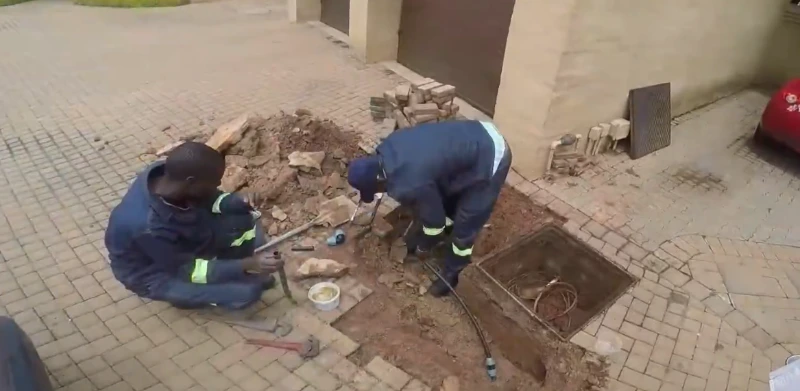
Soil chemistry and movement: Lynnwood's glacial till soils have significant clay content that swells and contracts with moisture. This movement exerts ongoing lateral and vertical stress on buried pipes, particularly at joints and bends. Over 20–40 years, this fatigue can cause galvanized joints to loosen or copper lines to develop stress cracks at elbow fittings.
Aging galvanized steel: Galvanized steel service lines installed before the 1960s corrode from the inside out as the zinc protective coating wears away. When galvanized lines rust through, they create particulate in the water supply and eventually fail structurally. Homes in established Lynnwood neighborhoods with original service lines from that era are candidates for inspection.
Tree roots: Root systems from mature trees — including the significant native Douglas firs, cedars, and ornamental plantings common in Lynnwood yards — can grow toward and around buried water lines. Root intrusion rarely directly punctures a modern service line, but roots wrapping around aging pipe can accelerate joint failures and damage older plastic sleeves.
Ground settlement: Lynnwood's hilly topography means some properties have experienced minor slope movement or fill settlement. Where the grade has shifted since original installation, service lines may have developed unsupported spans or stress points at depth changes.
Signs of a Main Line Leak
A steady upward trend in your monthly water usage — particularly if your household routines haven't changed — often points to a service line or under-slab leak running continuously.
Unlike a localized fixture problem, a service line leak reduces pressure throughout your entire home because water is escaping before it reaches the distribution system.
If you know roughly where your service line runs, a consistently soft or saturated area of lawn along that path — particularly in dry weather — suggests water is escaping there.
Rust-colored or brown water, particularly on initial morning draws, can indicate internal corrosion in an aging galvanized service line that is beginning to fail.
If you open your water meter box at the curb and find it has collected standing water not due to rain, this can indicate a break near the meter connection.
In quiet conditions, some service line leaks produce an audible hiss or rushing sound that can be heard by pressing your ear to a metal pipe or the ground near the suspected path.
Where the service line enters your home's foundation, persistent dampness on the interior wall or floor near that point may indicate the line is seeping at the penetration.
Confirming your neighbors' usage hasn't spiked helps rule out a broader utility issue and points more clearly toward a problem specific to your service line.
Homeowner Checks Before Calling
Before scheduling an inspection, these simple observations can be useful — and help you describe the problem more clearly when you call.
- Meter test: With everything off inside, watch the small flow indicator on your meter (usually a red or silver triangle or star). If it moves at all with nothing running, water is flowing through your service line — confirming a leak exists.
- Walk your yard: On a dry day, walk the approximate path of your service line from the meter to the house. Look for any area that is noticeably softer, greener, or more saturated than the surrounding lawn. Take a photo if you find something unusual.
- Check your water heater's cold supply: For galvanized line concerns, run cold water from a faucet after the home has been unused overnight. Brownish or rust-colored water on the first draw can indicate internal corrosion in the supply line.
Safety note
Do not attempt to dig up your service line or access the meter valve yourself. The curb stop valve requires a specialized key and improper operation can damage the valve mechanism. Leave all below-grade access to the detection specialist.
How Main Line Leak Detection Works
- Pressure isolation test: The service line is isolated at accessible points and pressure-tested. A pressure drop measured over a defined period confirms an active loss in the line, separating a service line issue from a house-side supply problem.
- Acoustic ground probing: Specialized acoustic equipment with ground-contact microphones is used to scan along the known or likely pipe path. The escaping water creates an acoustic signature that varies with pipe material, depth, and flow rate — an experienced technician can use this to identify the approximate leak zone.
- Electronic correlator (when available): Correlation devices measure the time difference in the acoustic signal between two probe points on the pipe and calculate the leak location mathematically. This method can narrow a leak location significantly even on longer service line runs.
- Gas tracer method (some cases): In situations where the pipe route is not clearly defined or the leak signal is weak, a tracer gas may be introduced into the line. The gas escapes at the breach and rises through the soil, where a sensitive detector identifies the exit point at the surface.
- Report and markings: Once the leak is pinpointed, the specialist marks the surface location clearly and provides a written report that a plumbing contractor can use to plan excavation and repair. Accurate location is what prevents unnecessary digging across multiple spots.
Common Pipe Materials & Failure Risk
The material your service line is made of is the primary predictor of when and how it may fail. Understanding your pipe type helps set realistic expectations before inspection.
| Pipe Material | Typical Lifespan | Common in Lynnwood Area | Primary Failure Mode | Detection Priority |
|---|---|---|---|---|
| Galvanized Steel | 40–70 years | Pre-1970 homes | Interior rust buildup, then pinhole corrosion | High — inspect if 50+ years old |
| Copper | 50–80 years | 1960s–1990s homes | Pinhole leaks from soil acidity or water chemistry | Medium — inspect if pressure drops noticed |
| Lead | Indefinite (health risk) | Pre-1930 homes (rare) | Health concern regardless of leaks | Urgent — replace regardless of condition |
| PVC / CPVC | 25–40 years | 1980s–2000s | Joint failure, freeze-thaw cracking | Low–Medium after 25 years |
| PEX | 25–50 years | 2000s–present | UV degradation, rodent damage | Low for most of service life |
Related Issues to Rule Out
Not every high water bill or pressure drop is a service line leak. Detection professionals typically rule out related possibilities during inspection:
- Running toilets and slow drips at fixtures (check independently at home first)
- Irrigation system leaks in buried lateral lines — addressed by our irrigation leak detection service
- Under-slab supply line leaks — covered by slab leak detection
- Utility meter errors (rare but worth confirming with your water utility if all else seems clear)
Frequently Asked Questions
Who is responsible for the main water service line?
In most Lynnwood-area jurisdictions, the homeowner is responsible for the service line from the curb stop (the valve at or near the meter box) to the home. The water utility typically owns and maintains the main in the street and the meter itself. Confirm the specific boundary with your local water utility if you're unsure.
Can a main line leak cause foundation damage?
Over time, yes. A sustained service line leak saturates the soil around and beneath your foundation, which can soften clay soils, cause minor settling, and maintain high moisture levels against foundation walls. In Lynnwood's wet climate, where soils are already clay-heavy and moisture-prone, this effect can compound faster than in drier regions.
How deep are service lines buried in Lynnwood?
Service lines in this area are typically buried at least 12 to 18 inches deep to protect against surface damage. Some lines, particularly those installed on properties with significant slope or near streets, may be deeper. The detection specialist will confirm depth during the inspection using pipe tracing equipment.
Is there a way to prevent main line leaks?
There's no guaranteed prevention, but a few practices help: maintaining water pressure within normal ranges (ask your utility about your supply pressure if you're concerned), having older galvanized lines evaluated before they fail completely, and avoiding heavy vehicle traffic over the pipe route in your yard. Trees planted directly over a service line path can increase root interference risk.
How long does a service line inspection take?
A main water service line inspection typically takes one to two hours for a standard residential lot. Longer or more complex runs, or cases where the pipe path is unknown, may take longer, as additional time is needed for pipe tracing before acoustic testing can begin.
Will I need to replace the whole line?
Not necessarily — it depends on what the inspection finds. A localized joint failure on an otherwise intact line may be repairable at a single excavation point. A line that is broadly corroded or has multiple failures may be a candidate for full replacement. The detection report gives a repair contractor the information they need to make that assessment accurately.
Related Services
Areas Served
We connect homeowners in North Lynnwood, Martha Lake, Alderwood Manor, and all nearby communities with qualified main line leak detection specialists.