Professional Leak Detection
in Lynnwood, WA
Worried about a leak hiding in your slab, walls, or crawlspace? We connect you with experienced local specialists who use non-invasive technology to find the source — before water does more damage.
ClearLine is a referral service connecting you with licensed leak detection professionals.
Water Leaks in Lynnwood Don't Fix Themselves
If you have a feeling something's off — your water bill jumped without explanation, there's a faint sound of dripping when nothing's running, or a patch of flooring feels soft underfoot — you're right to take it seriously. Hidden leaks are one of the most common and most costly home problems in the Pacific Northwest, and Lynnwood's climate makes them especially stubborn.
Lynnwood sees sustained rainfall from October through April and clay-heavy soils that hold moisture against foundations long after the rain stops. That combination keeps ground-level and underground pipes under constant pressure and creates conditions where even a small leak can accelerate into a significant structural or mold issue within a few months. The good news is that modern leak detection is far less disruptive than most homeowners expect. Specialists can locate a hidden leak beneath a concrete slab or inside a wall without opening a single tile or cutting into drywall in most cases.
ClearLine connects homeowners and property managers in Lynnwood and surrounding Snohomish County communities with experienced local leak detection professionals. When you call, you'll be connected with a qualified specialist who can assess your situation, explain what's likely going on, and give you a clear path forward — no pressure, no guesswork.
Leak Detection Services in Lynnwood
Every type of leak has its own signature. Here's what our network of professionals handles.
Slab Leak Detection
Pipes running beneath concrete foundations can develop pinhole leaks from soil movement, corrosion, or shifting. We use acoustic listening devices and thermal imaging to find the exact location — often without a single saw cut. Many Lynnwood homes built on clay soil are particularly prone to slab movement that stresses pipes over time.
Learn moreCrawlspace & Under-House
Lynnwood's wet winters drive moisture into crawlspaces through perimeter walls and floor framing. We identify the leak source — pipe joint, drain line, or intrusion — before mold gets a foothold.
Learn moreMain Water Service Line
The buried line between the street meter and your home is a frequent culprit behind high water bills and soggy ground patches. Pressure testing and acoustic methods pinpoint breaks without excavating your whole yard.
Learn moreEmergency Leak Detection
Active water intrusion, a burst line, or rising water in your basement? Emergency specialists are available for urgent situations. Call now — fast detection limits the damage.
Call Emergency LineWall & Ceiling Leaks
Discolored patches, bubbling paint, or a musty smell in a room with no obvious source? Thermal cameras can see through surfaces to map exactly where moisture is tracking inside your walls.
Learn moreSewer Camera Inspection
A fiber-optic camera travels your drain line to reveal root intrusion, joint separation, or collapse. Alderwood Manor and older neighborhoods frequently see root damage from mature trees in the right-of-way.
Learn moreWater Meter & High-Bill Leak
If your bill jumped $50 or more without a change in habits, a slow leak is almost certainly the cause. A meter-based test can confirm in under an hour whether water is escaping your system.
Learn moreIrrigation & Sprinkler Leaks
Underground irrigation lines in Pioneer Hill and Cedar Valley properties frequently develop joint failures after freeze-thaw cycles. Pressure testing locates breaks without tearing up landscaping.
Learn moreCommercial Leak Detection
Businesses in the Lynnwood City Center and multi-family properties along major corridors require fast, low-disruption detection that minimizes tenant impact and downtime.
Learn morePool & Spa Leaks
Losing more than a quarter inch of water daily to evaporation? Pressure and dye testing isolates whether loss is from the shell, fittings, or return lines — before extensive digging begins.
Learn moreAppliance Water Line Leaks
Refrigerator ice makers, dishwashers, and washing machines rely on flexible supply lines that harden and crack over time. A slow drip behind an appliance can go unnoticed for months.
Learn moreAttic & Roof Intrusion
In Lynnwood's rainy climate, flashing failures and saturated insulation go undetected until visible staining appears. Moisture mapping traces the path from entry point to damage.
Learn moreWater Intrusion Detection
Groundwater and surface runoff finding paths into your basement, foundation walls, or crawlspace? Moisture meters and thermal imaging identify exact entry points before damage compounds.
Learn moreWhat's Your Home Telling You?
Not sure where to start? Match your symptom to the most likely type of leak below.
Understanding Water Leaks in Lynnwood Homes
A clear explanation of how leaks develop, why this region is particularly prone to them, and what happens during a professional inspection.
Why Lynnwood Homes See More Leak Problems
Snohomish County's geology creates a specific set of conditions that accelerates pipe wear and moisture intrusion. The region's soils include substantial clay content — particularly glacial till deposited after the last ice age — which expands when saturated and contracts in drier periods. This seasonal movement puts mechanical stress on buried water lines, drain pipes, and foundations in ways that sandy or loam soils simply don't.
Lynnwood receives roughly 37 inches of precipitation per year, concentrated heavily in the October through April wet season. During these months, soil stays saturated for extended periods, which keeps ground pressure on underground pipes elevated. Older pipes — especially galvanized steel lines common in homes built before 1985 — corrode faster in perpetually moist environments than in drier climates. Copper pipes in older construction can also develop pinhole leaks from a combination of water chemistry and mechanical flexing.
Before calling anyone, turn off all water in your home and watch your meter's flow indicator (a small dial or digital readout) for 30 minutes. If it moves, water is leaving your supply system — and a professional can take it from there.
How Leaks Are Located Without Tearing Up Your Home
The tools used in modern leak detection have made the process far less disruptive than it was even 15 years ago. Rather than relying on visual inspection or educated guesswork, specialists use a combination of methods tailored to the suspected location of the leak.
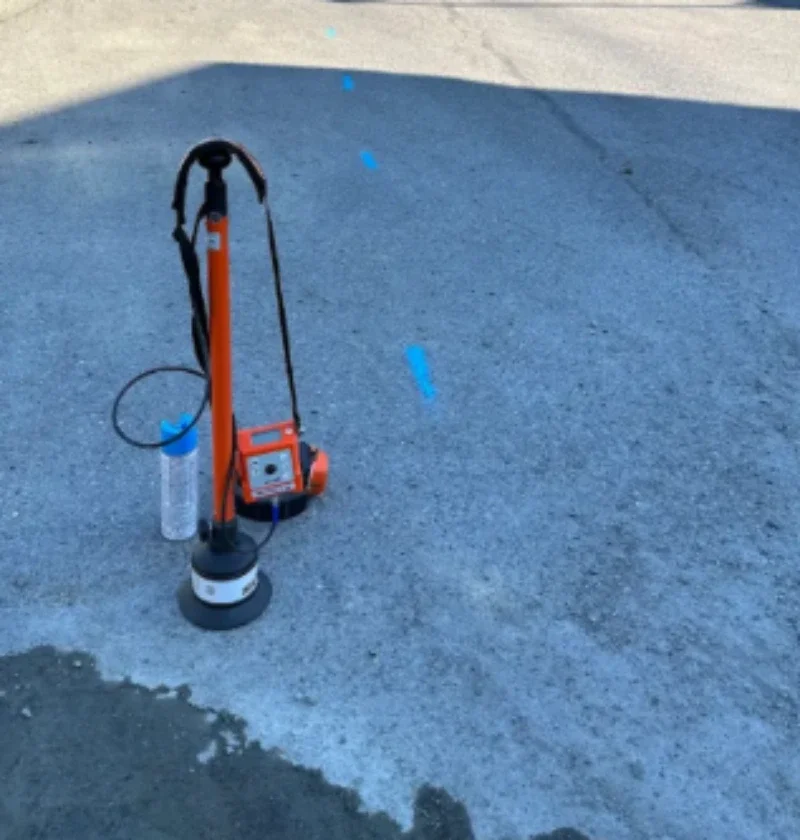
Acoustic detection uses sensitive ground microphones and listening rods that can pick up the distinct sound signature of water escaping a pressurized pipe. The sound is amplified and filtered, allowing a technician to walk a grid over your yard or crawlspace and identify the loudest point — which corresponds to the leak location. This method works well for buried supply lines and slab leaks.
Thermal imaging cameras detect temperature differences in surfaces. A pipe leaking warm water beneath a concrete slab or within a wall cavity will create a subtly different temperature pattern visible to an infrared camera. This method is especially useful for hot water supply line leaks and helps map the spread of moisture inside wall cavities before deciding where to cut.
Pressure testing isolates sections of your plumbing system to identify which zone is losing pressure. By pressurizing a segment and monitoring it with a gauge, technicians can confirm whether a leak exists and roughly how severe it is before any invasive work begins.
Video camera inspection sends a fiber-optic camera directly into drain and sewer lines to provide a live feed of conditions inside the pipe — root intrusion, joint offsets, cracks, and buildup all become visible immediately.
In Lynnwood's humidity, mold can begin developing inside wall cavities within 24 to 48 hours of a slow leak starting. If you smell mildew in a room that has no obvious explanation, it's worth having a professional check the walls and crawlspace before the problem grows.
What Happens After a Leak Is Found
Once the leak's location is confirmed, the detection specialist provides you with a written or verbal report identifying the exact point of failure and the probable cause. This report is what a plumber or repair contractor needs to open only the specific area required — not the entire floor or wall system. In most cases, this precise information means the repair is both faster and less expensive than it would be without prior detection.
Detection and repair are often handled by different professionals. A leak detection specialist's job is to find the problem accurately and completely. A licensed plumber or pipe repair contractor then performs the actual fix. If you need a referral to a repair contractor after detection, the professionals in our network can often point you in the right direction. Because ClearLine Leak Detection is a referral service, the specialists we connect you with are independent licensed contractors — their credentials and insurance are their own, and any service agreement is directly with them.
From Your Call to a Clear Answer
Call or Request
Describe what you're experiencing. We match you with an available local specialist right for your situation.
Inspection Scheduled
The specialist confirms your appointment, often same-day for urgent situations. No tools are brought out before a brief assessment of your symptoms.
Non-Invasive Detection
Using acoustic, thermal, or pressure tools appropriate for your leak type, the technician systematically locates the source.
Findings Explained
You receive a clear explanation of what was found, where it is, and what the recommended next step is — before any repair work begins.
How the referral works: ClearLine Leak Detection is a referral service. When you call, we connect you with a licensed leak detection professional in our network who serves the Lynnwood area. Any service agreement, pricing, and work authorization is directly between you and the professional contractor. ClearLine does not perform the detection work itself.
The Longer a Leak Runs, the More It Costs
A slow pinhole leak in a supply line can lose 250 gallons or more per day, adding meaningfully to your water bill every month. But the water bill is often the least of the costs. Sustained moisture inside a wall cavity promotes mold growth that can require professional remediation — a significantly larger expense than the leak itself. In a crawlspace, ongoing moisture weakens floor joists and girders over time, which can lead to structural repairs.
In Lynnwood's clay soil, a leak near a foundation can cause the soil to shift and settle unevenly, which over years can affect the foundation itself. A slab leak that goes undetected for six months to a year sometimes requires hydraulic lifting of the affected slab section in addition to the pipe repair — again, a cost that dwarfs the original detection fee.
The practical advice from local contractors is consistent: finding a professional water leak specialist in Lynnwood as soon as you notice any sign of a problem is almost always the cheaper path. Early detection means a small repair instead of a remediation project.
If you have active flooding or a clearly broken pipe, locate your main shutoff valve (usually where the main line enters your home) and close it immediately. Then call us.
Leak Detection Cost Factors
Detection fees vary based on several conditions. Here's what typically influences the price of an inspection in the Lynnwood area.
| Factor | Lower Cost | Higher Cost |
|---|---|---|
| Leak location | Visible crawlspace or accessible pipe | Under concrete slab or deep burial |
| Number of leak points | Single confirmed source | Multiple suspected areas, large property |
| Equipment required | Acoustic listening + pressure test | Thermal imaging + video camera + acoustic |
| Urgency | Scheduled next-day inspection | Same-day or after-hours emergency response |
| Property type | Single-family residential | Commercial, multi-unit, or large lot |
| Pipe type | Accessible copper or PVC | Galvanized iron in older homes, cast iron drain |
These are general factors — actual fees depend on the individual contractor. Ask your detection specialist for a written estimate before work begins.
Leak Detection Across Lynnwood and Snohomish County
We connect you with local professionals who know the neighborhoods, the soil conditions, and the infrastructure age of each area.
Lynnwood Neighborhoods
Martha Lake
Dense 1980s–90s residential. Aging copper and galvanized pipes near wetland edges are particularly vulnerable to corrosion and crawlspace moisture.
Meadowdale
Hillside terrain above Puget Sound. Slope drainage and soil movement put extra stress on buried service lines and perimeter foundation drains.
Alderwood Manor
One of Lynnwood's oldest neighborhoods. Homes from the 1950s–70s often retain original iron pipes and see root intrusion from mature trees along sewer laterals.
North Lynnwood
Mixed residential density. Shared service lines and aging infrastructure make main water line and meter leaks more common in this area than most.
Cedar Valley
Forested lots with clay-heavy soil that retains moisture against foundations. Crawlspace water intrusion and perimeter drain failures are frequently reported here. Professional crawlspace leak detection helps catch issues early.
Scriber Lake
Adjacent to the Scriber Lake wetlands. Elevated groundwater tables in this area create higher baseline moisture pressure on slabs and foundation perimeters.
South Lynnwood
Flat terrain with a high proportion of slab-on-grade homes from the 1960s–80s. Aging hot water supply lines under older slabs are a recurring source of hidden leaks.
Lynnwood City Center
Commercial corridors and mixed-use properties. Water meter discrepancies and aging municipal connections are common concerns for businesses in this zone.
College District
Near Edmonds College. High-turnover rentals and older student housing often have deferred maintenance that allows slow leaks to go unreported longer than in owner-occupied homes.
Pioneer Hill
Elevated neighborhood with irrigated landscaping. Pressure stress on downslope pipe runs and freeze-thaw damage to irrigation laterals are common seasonal issues.
Beverly Acres
Quiet residential with mature tree cover. Root intrusion into sewer laterals is a documented concern. Find hidden leaks fast with a camera inspection before backups occur.
Nearby Communities
Edmonds
Waterfront city with older homes near the marina and hillside residences where slope drainage creates unique leak risk.
Mountlake Terrace
Dense residential with many mid-century homes. Galvanized pipe systems from original construction are at end of service life.
Mill Creek
Newer planned development with irrigation-heavy landscaping. Sprinkler and drip line leaks are common, particularly after winter freeze events.
Mukilteo
Coastal terrain with bluff-side homes. Soil movement and perched water tables create slab and foundation moisture challenges.
Brier
Small residential city surrounded by Lynnwood. Large lots with private wells and septic systems have specific detection needs.
Bothell
Growing city on the Snohomish-King County border with significant new construction alongside aging 1970s–80s neighborhoods.
Picnic Point
Coastal community near Possession Sound. Salt air and proximity to shoreline wetlands accelerate corrosion of older metallic pipes.
Lake Stickney
Lakeside neighborhood with high water table conditions. Crawlspace moisture, sump failures, and perimeter drain issues are common.
How ClearLine Connects You to the Right Professional
ClearLine Leak Detection operates as a referral service for homeowners and property managers in the Lynnwood area. When you call or make contact, we gather the basic details of your situation and connect you with a qualified local specialist in our network who is right for your specific type of leak and your location.
The professionals in our network are independent, locally operating contractors who perform leak detection as a core part of their business. They carry their own licensing and insurance. Our role is to make sure you reach the right person quickly — especially important when a leak may be actively running.
We do not take payment for the detection work, and we do not add a markup to the contractor's fees. Our goal is simply to help you get to a professional faster than searching on your own during a stressful situation.
What to Have Ready
- Your address and property type
- A description of what you've noticed
- When the symptom started
- Whether it's getting worse
- Any recent plumbing work done
Call Lynnwood's Leak Detection Experts
Describe what you're seeing and we'll connect you with a local specialist — often same-day.
(425) 437-5492Lynnwood, WA · Snohomish County · Mon–Sun
Frequently Asked Questions About Leak Detection in Lynnwood
How do I know if I have a hidden water leak?
Common signs include an unexplained spike in your water bill, the sound of running water when all fixtures are off, warm or damp spots on floors, discoloration on walls or ceilings, and reduced water pressure throughout the home. A soft or spongy patch of flooring — particularly over a slab-on-grade area — can also indicate that water is tracking beneath the surface. If you notice any of these, it's worth having a professional inspection done before the problem gets worse.
Will leak detection damage my floors or walls?
In most cases, no. Modern leak detection uses acoustic listening equipment, thermal imaging cameras, and electronic pressure testing — none of which require cutting, drilling, or digging in order to locate the leak. The goal is to pinpoint the exact location before any repair work begins, which allows a repair contractor to open only the specific area that needs to be accessed. This reduces cost and avoids unnecessary damage to your home.
How long does a leak detection inspection take?
Most residential leak detection inspections take between one and three hours, depending on your home's size and the complexity of the suspected leak. A basic water meter test and pressure check can often be completed in 30 minutes. A full slab investigation with acoustic equipment, or a sewer inspection using a camera, may take longer. Your specialist can give you a time estimate when scheduling based on what you describe.
Why is leak detection so important in Lynnwood specifically?
Lynnwood's sustained wet season, clay-heavy glacial soils, and significant stock of homes built before 1990 create conditions where pipe leaks develop more frequently and escalate faster than in drier climates. Clay soil expands and contracts with moisture, mechanically stressing buried pipes over time. The long wet season keeps soil saturated for months, accelerating corrosion in older metallic pipes and maintaining high groundwater pressure against foundations and crawlspaces.
Is ClearLine a plumbing company?
ClearLine Leak Detection is a referral service that connects homeowners and property managers in the Lynnwood area with licensed leak detection professionals. We help you reach the right specialist for your situation quickly. The professionals we connect you with are independent, licensed contractors who perform the detection work. Any service agreement and payment for services is directly between you and the contractor we refer you to.
What's the difference between a slab leak and a regular pipe leak?
A slab leak specifically refers to a failure in plumbing lines that run beneath or are embedded within a concrete foundation slab. Because these pipes are encased in concrete, the leak is harder to detect and harder to access for repair. A general pipe leak can occur anywhere in your system — inside walls, under sinks, in a crawlspace, at fittings, or along drain lines. The detection methods, tools used, and repair approach differ depending on the location.
Can a small leak really cause major damage?
Yes, consistently. Even a pinhole leak can add hundreds of dollars to your annual water bill while promoting mold growth inside wall cavities and weakening structural wood over time. In Lynnwood's rainy climate, the ambient moisture level means mold can begin developing within 24 to 48 hours of a slow leak starting — much faster than in drier regions. A leak that goes undetected for six months to a year can turn what would have been a simple pipe repair into a remediation and structural repair project.
How do I read my water meter to check for a leak?
Turn off all water fixtures and appliances in your home, then locate your water meter — usually near the sidewalk at the edge of your property or at the street. Record the meter reading or note the position of the flow indicator (a small red or silver dial). Wait 30 minutes without using any water, then check the meter again. If the numbers have changed or the dial has moved, water is flowing through your system and you likely have a leak somewhere. This test tells you a leak exists, but not where — that's where professional detection comes in.
What areas near Lynnwood do you serve?
ClearLine serves all Lynnwood neighborhoods including Martha Lake, Meadowdale, Alderwood Manor, North Lynnwood, Cedar Valley, Scriber Lake, South Lynnwood, Lynnwood City Center, College District, Pioneer Hill, and Beverly Acres. We also connect homeowners in nearby communities including Edmonds, Mountlake Terrace, Mill Creek, Mukilteo, Brier, Bothell, Picnic Point, and Lake Stickney.
What should I do right now if I think I have an active leak?
If you suspect an active leak, turn off your main water supply valve immediately to stop water flow and limit damage. This valve is typically located where the main water line enters your home — often in a utility room, crawlspace, or near the foundation — or at the meter box near the street. Once the water is off, call a leak detection professional. Avoid opening walls or digging around pipes yourself, as this often makes accurate detection harder and may create additional damage.
Not Sure What's Going On? That's What We're For.
You don't need to know exactly what type of leak you have before you call. Describe what you're experiencing and we'll connect you with the right local specialist.