Appliance Water Line Leaks Explained
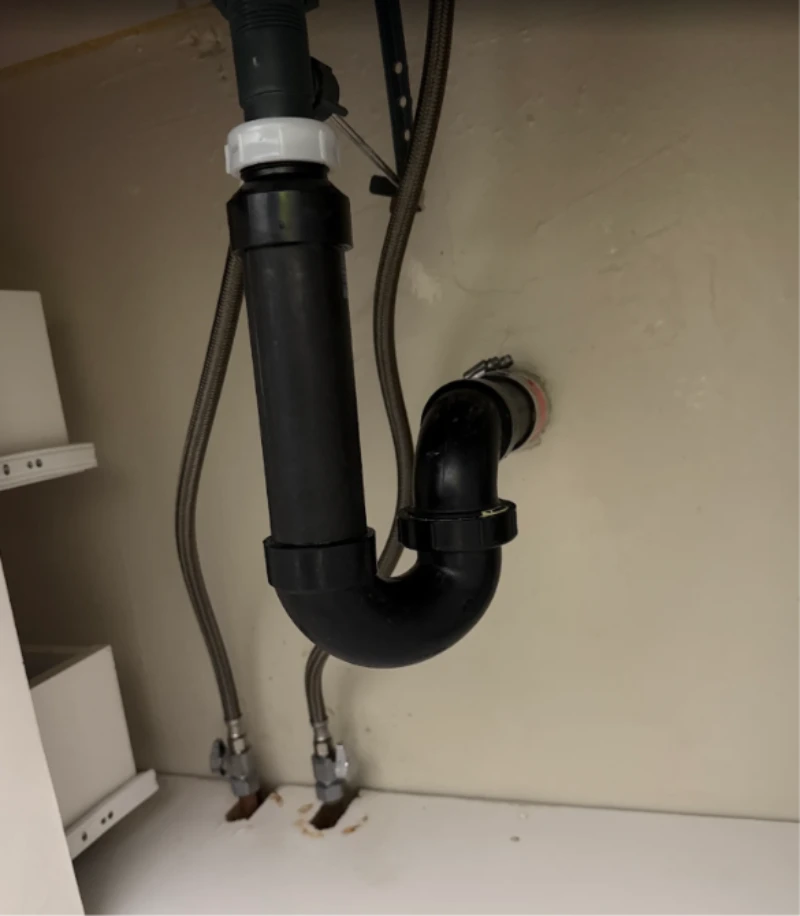
Modern homes contain numerous appliances that connect to the household water supply: refrigerators with ice makers and water dispensers, washing machines, dishwashers, whole-house humidifiers, water softeners, under-sink filtration systems, and water heaters. Each of these connections — typically a flexible supply line, a compression fitting, or a push-connect fitting — is a potential failure point that can produce a drip, a slow spray, or in some cases a significant flood.
Appliance water line leaks range from immediately obvious (a water heater drain valve dripping onto the floor) to completely hidden (a refrigerator ice maker line leaking slowly behind the unit over months, saturating the subfloor and cabinet base). The hidden ones are the concern: because appliances are typically pushed against walls or built into cabinetry, the space immediately behind or beneath them is rarely inspected, and a slow leak there can persist for a very long time.
In Lynnwood's climate, where ambient moisture is already elevated for much of the year, concealed moisture from a slow appliance leak creates favorable conditions for mold growth and wood rot in floor assemblies and wall bases — conditions that can develop faster than they would in drier climates. An appliance water line investigation is appropriate when you have unexplained moisture, floor damage, or cabinet deterioration near any water-connected appliance.
Common Appliance Leak Sources
Refrigerator supply line: The small flexible line (typically 1/4-inch) that supplies the ice maker and water dispenser connects at the wall valve and at the refrigerator's inlet port. These connections can work loose over time, particularly if the refrigerator is occasionally pulled out and pushed back. The valve itself can also fail. Leaks at the wall connection may go unnoticed behind the unit for extended periods.
Washing machine supply hoses: The rubber or braided-steel fill hoses on a washing machine are one of the more common sources of significant water damage in homes. Standard rubber hoses degrade over time and can burst without warning, particularly at the fitting connections. Washing machine supply hose failures represent a disproportionately high share of household water damage claims. Slow drips at the hose connection or from the back of the machine may be precursors to a more significant failure.
Dishwasher supply and drain lines: The supply line beneath the sink and the drain line connecting to the sink drain can develop leaks at their fittings. Because the space under the sink is often full of cleaning products and rarely inspected thoroughly, drips can produce significant cabinet base damage before they're noticed.
Water heater connections: Supply and discharge connections to a water heater — particularly at the cold supply inlet, the hot outlet, the temperature-pressure relief valve discharge pipe, and the drain valve — can all develop leaks. A drip from the T&P relief valve that discharges inside a closed closet can go unnoticed and indicates the heater may be experiencing pressure events that warrant attention.
Water softener and filtration systems: Whole-house water softeners connect to the supply before the distribution system. Their brine tanks, bypass valves, and regeneration connections are potential leak points. Under-sink filtration systems with multiple filter housings and fittings can develop small leaks at any of the cartridge or fitting connections.
Humidifier supply lines: Whole-house bypass or flow-through humidifiers mounted on the air handler have a water supply line and a drain. Both connections can develop issues, and because these components are often in utility spaces that aren't regularly visited, slow leaks may go unnoticed.
Signs of an Appliance Water Line Leak
Floor discoloration, warping hardwood, or soft areas in flooring near a water-connected appliance — particularly behind it — indicate sustained moisture exposure at the base.
Particle board or MDF cabinet bases absorb water and swell significantly. Swelling or crumbling at the base of under-sink or adjacent cabinets suggests a slow water source in that area.
A persistent musty smell in spaces where water-connected appliances are located, particularly in areas with limited ventilation, suggests mold developing from concealed moisture.
A water heater that cycles on more frequently than usual — particularly for a home with stable occupancy and hot water use — may be losing heat through a connection that is slowly losing hot water.
Refrigerator ice makers or dispensers that produce reduced output may have a supply line restriction or a partial valve failure — which can also be producing a slow leak at the connection point.
White or greenish mineral deposits at a fitting connection indicate that water has been evaporating at that point — a sign of a slow persistent drip even if no standing water is visible.
What an Appliance Leak Investigation Involves
Appliance water line leak detection combines accessible visual inspection with moisture measurement tools to find leaks that are concealed by appliance positioning, built-in cabinetry, or finished flooring:
- The specialist identifies all water-connected appliances in the home and their supply connections. A systematic check of accessible connection points — all the places supply lines and fittings can be reached without moving heavy appliances — is performed first.
- Where the source is not obvious, moisture meters are used to assess the moisture content of floor, subfloor, and cabinet base materials near each appliance. Elevated moisture in materials that should be dry points to a source nearby.
- Thermal imaging may be used to identify areas of moisture accumulation in floor assemblies or behind walls near appliance connections — particularly for washing machine and dishwasher connections where concealed moisture accumulation is common.
- Appliances are repositioned where necessary to inspect behind and beneath them directly. The specialist checks the connection points at both the wall/inlet valve end and at the appliance end, and observes any visible staining, mineral deposits, or moisture at those connections.
- The source is documented, and the extent of any secondary moisture damage is noted in the report. Repair of the supply line itself is typically straightforward plumbing work; secondary damage assessment guides any remediation or repair decisions.
Practical Prevention Steps
While not all appliance leaks are preventable, a few practices significantly reduce risk:
- Replace washing machine supply hoses proactively if they are standard rubber and have been in service more than five years. Braided stainless steel hoses are a more durable alternative.
- Periodically pull out the refrigerator and inspect the supply line connection at the wall valve. A loose compression fitting can often be gently re-snugged before it produces a leak.
- If you notice your water heater's T&P relief valve dripping, have it assessed by a plumber — this indicates the valve is opening under pressure events that could indicate a larger issue with the heater.
- When replacing appliances, use the opportunity to inspect the water connections behind the old unit before installing the new one. Water damage found at that point can be addressed before it is concealed again.
Common Appliance Line Failures — Detection Guide
| Appliance | Line Type | Common Failure Point | Warning Signs | Risk Level |
|---|---|---|---|---|
| Refrigerator (ice maker) | Braided steel or plastic 1/4" line | Compression fitting at valve; kink behind fridge | Water under fridge, ice maker stops making ice | Medium — slow leak often goes unnoticed |
| Washing machine | Rubber or braided supply hoses | Hose fitting corrosion; rubber hose age failure | Moisture behind machine; sudden hose burst | High — burst hose can release 650 gal/hr |
| Dishwasher | Plastic or stainless fill line | Door gasket, fill valve, drain hose | Water under or in front of dishwasher | Medium — often leaks into subfloor undetected |
| Water heater | Cold inlet, hot outlet, PRV line, drain | TPR valve, anode-related tank corrosion | Rust-colored water, pooling at base, rumbling | High — tank failure can release 50–80 gallons |
| Water softener / filter | Bypass saddle valve or inline | Saddle valve, filter housing O-ring | Wet floor near unit; salt bridge in tank | Low–Medium |
| HVAC condensate line | PVC drain line from air handler | Clogged line causing pan overflow | Water stain on ceiling below air handler | Medium — commonly misdiagnosed as roof leak |
Frequently Asked Questions
Is a washing machine hose failure an emergency?
A burst washing machine hose can discharge water at the full supply rate — potentially flooding a laundry room very quickly. If a supply hose fails or you find the floor around the machine significantly wet, turn off the supply valves at the wall immediately. If the machine is running, stop it and turn off the valves behind it. A slow drip at the connection is less urgent but warrants investigation before it becomes a larger failure.
Can I detect a refrigerator ice maker leak without moving the refrigerator?
A moisture meter applied to the floor in front of and beside the refrigerator can sometimes detect elevated moisture in the flooring material without moving the unit. However, the most reliable assessment involves pulling the refrigerator out to inspect the line at both connection ends. This is a standard part of appliance leak investigation.
My floor near the dishwasher is soft. Is that definitely a dishwasher leak?
Not necessarily — it's the most likely cause if the soft area is directly in front of or beneath the machine, but wall leaks, plumbing failures in the wall cavity behind the machine, and even window frame leaks in adjacent walls can produce floor moisture in a kitchen area. A moisture investigation determines the actual source before any floor repair begins.
Does homeowner's insurance cover appliance water line leaks?
Coverage varies by policy. Some policies cover sudden and accidental discharge but exclude gradual leaks. We don't advise on insurance matters — contact your carrier directly. Documentation of the leak source from a professional investigation can be useful when submitting a claim.
Should I call an appliance technician or a leak detection specialist?
If the symptom is appliance malfunction — ice maker not working, dishwasher not draining — an appliance technician is the right first call. If the symptom is water on the floor, floor damage, or an unexplained water bill increase that points to a water-connected appliance, a leak detection investigation is the appropriate first step. The two types of work are distinct.
Can the water line to my washer be rerouted to avoid a failure-prone area?
That's a question for a licensed plumber assessing the specific installation. What a leak detection investigation provides is accurate identification of the current failure point and the extent of any moisture damage — giving a plumber and potentially a contractor the information they need to advise on repair options including any relocation considerations.